by Freddy Tran Nager, Founder of Atomic Tango + Communication Professor Drowning In Email…
Good ol’ fashioned email doesn’t warrant enough attention. Newer communication technologies get all the hype — e.g., Slack, the meeting that never ends — but we know why 54-year-old email still rules organizational communications…
- Everyone has at least one email address and most people check theirs daily.
- Unlike social-media platforms and chat apps, email is accessible in every country and on any device.
- Unlike even more primordial phone calls, an email can reach multiple recipients at once, while being less intrusive.
- Email is writing, so it carries official, legal weight.
- With email, no profit-motivated algorithm can dictate what you write or who you can reach… Except for freakin’ SPAM filters, which somehow always let SPAM through while blocking messages you actually want to read.
The fundamental problem with email: we all receive WAY TOO MUCH of it. Our inboxes overflow with SPAM and its cousin BACN (newsletters we subscribe to but never read). Consequently, for many of us, “inbox zero” is a fantasy that borders on pornography. Sorry (not sorry) for boasting, but every summer I manage to achieve nirvana briefly across all inboxes, including my social media DM boxes:
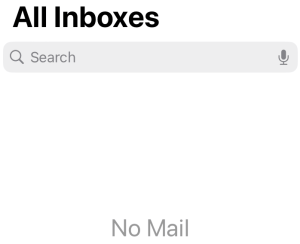
Yes, this actually happened. Makes you envious, huh?
Now, while we’ve all learned how to deal with SPAM… somewhat… what’s tougher to evade are “junk” emails from people we know, including coworkers. Can’t block them, right? If you work in an organization, you’ve likely received emails from well-meaning colleagues that simply chew up your time. Worse, you’ll encounter 2025 professionals, including a few communication professors who shall go unnamed, who still don’t know the difference between “reply” and “reply to all” (which can be entertaining, even scandalous, depending on the content).
Consequently, we don’t always respond to important emails on time. And sometimes we even lose them. (Gasp!)
Time for some cool rules pronto.
A friend who works in HR at a big-tech company showed me the organization’s email policies. They were written on a whiteboard under the header “Don’t Be An E-Hole.” (Given the exorbitant price of whiteboards, it should have been, well, an email, but that’s big tech for you.) I thought the rules deserved sharing , and she gave me permission to do so since her manager had found them somewhere else.
So here are 20 rules to help minimize e-holery, some from the tech company, some from me. Although they might not deliver world peace, they could create some peace of mind.
1. “Reply”: good. “Reply to all”: unless it’s to a small team you belong to, not so good.
2. Avoid forwards of forwards of forwards.
3. Make your subject line descriptive. (“Important” doesn’t suffice.)
4. Avoid email address overload. Use the BCC field, which also helps protect recipients from “reply to all” offenders.
5. “TO”: only relevant people who need to ACT on the email. Double check this. Then double check it again.
6. “CC”: only relevant people who need to see this as a courtesy (“FYI”). Double check this, too. You don’t want to accidentally leak company info to an outsider, such as a journalist or competitor.
7. Use the appropriate account. To plan after-work drinks, use your personal email, not company email.
8. Be informal, but not rude. People are especially sensitive about their names, so proofread your spelling, and don’t call Robert “Bob” or “Bobby” or “The Bobster” unless he prefers it that way.
9. Feel angry? Go talk to the person. As the saying goes, once you send smack, you can never go back. Your emails reside forever in the organization’s servers, ripe for investigations by HR and government agencies.
10. Don’t use email as an excuse to avoid personal contact. Conflict often arises and escalates online because of simple misunderstandings.
11. Summarize long discussions with bullet-points. Nothing makes overworked colleagues cringe like an article-length email does.
12. Describe contents of attachments. Given the amount of malware out there, consider notifying your recipients in advance that you’ll be sending one.
13. Double check to make sure you attached the attachment, especially in group emails. Otherwise, prepare for the “reply to all” bombardment.
14. All-caps are easier to read than italics, but WRITING IN ALL-CAPS IS THE EQUIVALENT OF SHOUTING. Use all-caps for OCCASIONAL emphasis only.
15. Don’t cry wolf: “High Priority” and “Urgent” better be damn important.
16. Don’t procrastinate. If you receive a truly important email requiring your response, reply within one business day.
17. Unless it’s a true emergency, respect your colleagues’ personal time after hours and on days off.
18. Proofread before sending. Sarcasm doesn’t always convey well in print. And there’s alwyas a typo.
19. Don’t thank anyone in advance (especially “thank you for understanding”). That’s not as polite as you think. In fact, it comes across as presumptuous and patronizing.
And my favorite…
20. This is a company, not a dating app. Enough said.
Did I miss anything? Please mention them in the comments. And if you agree with these points, you just might want to email them to someone.
Discover more from Atomic Tango
Subscribe to get the latest posts sent to your email.